On-Demand Delivery Management Software: How NZ Teams Dispatch, Route and Track Same-Day Orders
Drafted with AI assistance, edited and fact-checked by Sean Flannery. See our editorial policy.
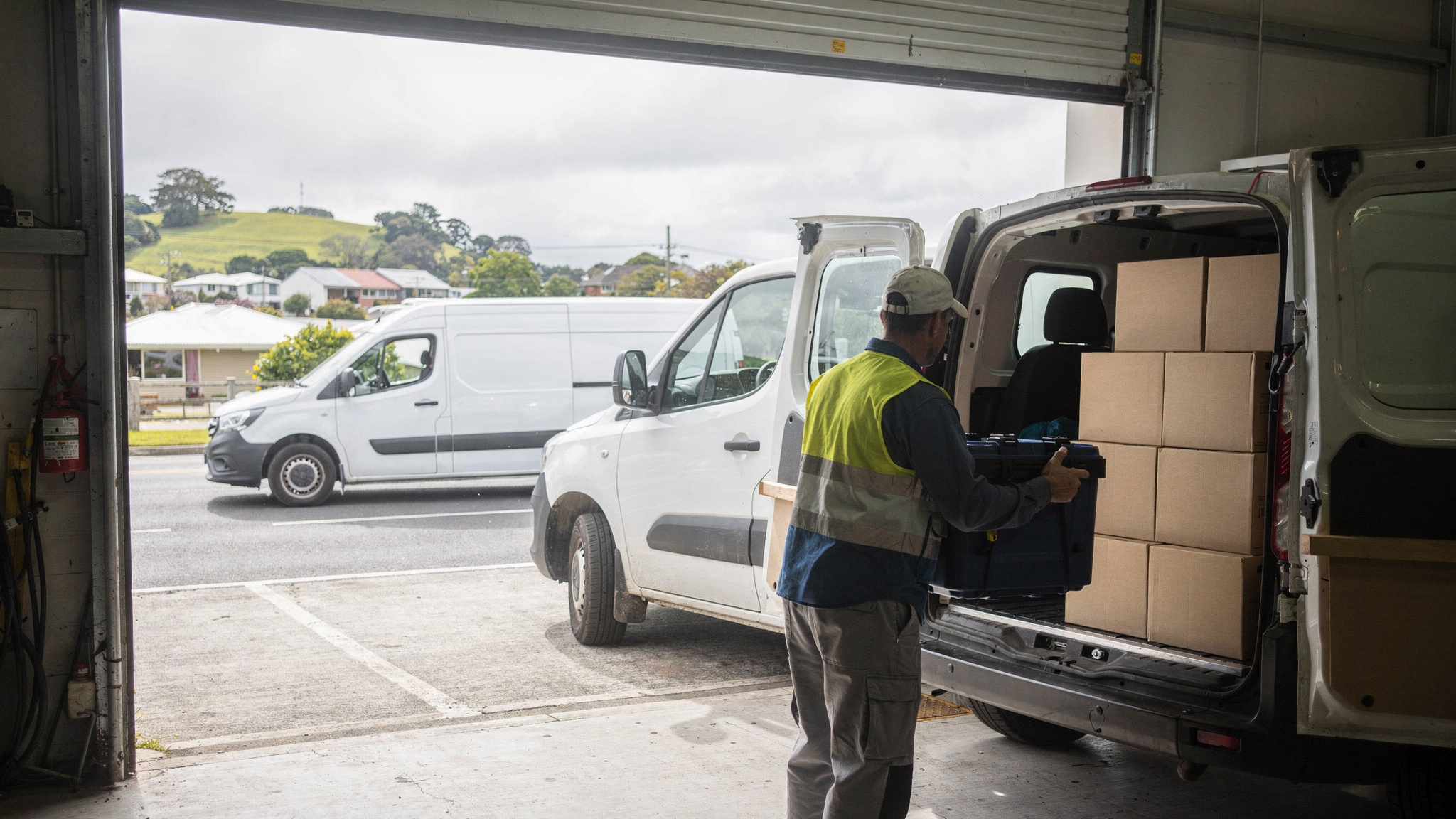
On-demand delivery management software takes a same-day order from checkout to doorstep. It assigns the job to the best-placed driver, slots it into a route that's already running, sends the customer a live tracking link and records proof of delivery. For New Zealand teams, it turns a same-day promise into a predictable arrival window, whether the drop is in central Auckland or at the end of a long rural run.
Planning the morning runs is the familiar part of the day. The real test is the order that lands mid-morning, after every van has left the depot, for an address on the other side of town.
Good software answers that order quickly, using vans that are already on the road.
What on-demand delivery management software does, from new order to doorstep
A same-day delivery involves a series of small jobs. Without software, a dispatcher handles each one by hand, with a whiteboard and a lot of phone calls.
Delivery software links those jobs, so each step passes clean information to the next. For a typical same-day order, the steps are:
- Order in: the job arrives from your online store, a phone order or an API connection, with the address and delivery window attached.
- Assign: the system checks where each van is, how much room it has left and what it has already promised, then picks the best-placed driver.
- Insert: the new stop goes into that driver's live route, and the remaining stops are re-sequenced around it.
- Notify: the customer receives an arrival window and a live tracking link.
- Prove: the driver captures a photo and signature at the door, and the job closes with a timestamp.
The last step also starts the next improvement. Every closed job becomes a data point on how long your routes really take.
Over time, that record lets you tighten your windows with confidence, because you know what your routes can actually deliver.
If you're comparing tools for planned runs as well, the guide to choosing delivery management software covers the wider feature set. The defining difference here is timing: on-demand software keeps planning after the vans have left.
How live dispatch slots same-day orders into routes already on the road
A same-day order that arrives after dispatch can go two ways. It can go on a dedicated trip, or it can join a van that's already out and heading in that direction.
That choice has a real cost. Capgemini, citing the Capgemini Research Institute, reports that last-mile delivery costs account for 41% of total logistics supply chain costs.
So for every same-day job, start by asking whether a van already on the road can take it. Keep the dedicated trip as the fallback.
Live dispatch answers that question by checking where each van is right now, how much space and time it has left, and which promised windows sit further down its route.
If the new stop fits without pushing those windows out, it goes in. If it doesn't fit, the dispatcher can see why and pick another van.
Locate2u brings dispatch, route optimisation, live tracking and proof of delivery together in one platform, so the order, the route and the customer update stay connected.
An Australian online pharmacy shows what this looks like day to day. SuperPharmacy's case study reports that its delivery team was spending up to one hour every day manually planning routes for prescription deliveries, and that a new urgent prescription meant regenerating the entire route from scratch.
The case study reports that with Locate2u's route optimisation, that daily planning now takes just 10 minutes, cutting route planning time by 83%. That is the result for one Australian business.
The flexibility mattered just as much. New prescriptions can now be slotted into existing routes on the fly without disrupting other deliveries, and that enabled SuperPharmacy to offer same-day prescription delivery as a core service.
In the case study's words: "Before Locate2u, we had to generate new routes if we wanted to change anything. Now we can adjust the day's deliveries on the fly."
You can test this on your own operation. Take a recent day's routes, add an order mid-run, and check what happens to the arrival time at every other stop. If the other windows hold, the insertion logic is working.
Why a precise arrival window wins customers more than raw speed
It's easy to assume customers mainly want same-day. The research points to something more specific: they want to know when.
McKinsey's 2023 research on same-day delivery found that consumers value tracking and precise timing. In its words: "They are happy to pay a higher premium for a service that allows them to track their shipment and gives precise information on when it will arrive, narrowed down to a two-hour window."
That changes the planning question. Instead of asking how fast you can deliver, ask how narrow a window you can promise and keep.
Start with windows your routes can reliably hold, and show them at checkout so customers choose one. Narrow them only when your own on-time record shows you can.
Then let the software keep customers informed. Automated notifications and a live tracking link tell them where their order is, so they don't need to phone and ask.
If a window slips, say so early. An updated arrival time sent automatically lets the recipient adjust their afternoon, and keeps their trust in the service.
Planning same-day routes on a road-led network, from Auckland to rural runs
New Zealand's freight moves by road. The Ministry of Transport's National Freight Demand Study, published in 2019, found that road carried about 93 per cent of total freight tonnes and 75 per cent of tonne-kilometres in 2017/18.
For a same-day service, that makes road travel time the main thing to plan around. Your route plan carries the whole promise.
Customer density is concentrated in one metro. Stats NZ projects that Auckland's population will reach 2 million by 2033.
That growth suits zone-based planning in Auckland. Group suburbs into clusters, give each cluster its own order cut-off, and let the optimiser build tight loops within each zone instead of crossing the harbour repeatedly.
Rural runs have the opposite shape: fewer drops, longer legs, and properties where the entrance can sit well back from the road.
On these runs, same-day works well as an add-on to a scheduled run. If a rural van goes out on set days, a same-day order for that area can join it, and the customer gets a firm day instead of an open promise.
Accurate addresses matter more on long legs. Ask customers for delivery notes at checkout, such as a gate code or the colour of the letterbox, so the driver finds the right entrance first time.
Inter-island jobs are a separate case. A delivery that crosses Cook Strait depends on sailing times, so treat it as a scheduled delivery with the crossing as a fixed leg, and keep on-demand promises within each island.
Locate2u's route optimisation builds routes from delivery locations, time windows and driver availability, so a dense Auckland loop and a long rural run are planned by the same rules.
Keeping early and late runs on schedule through South Island winter
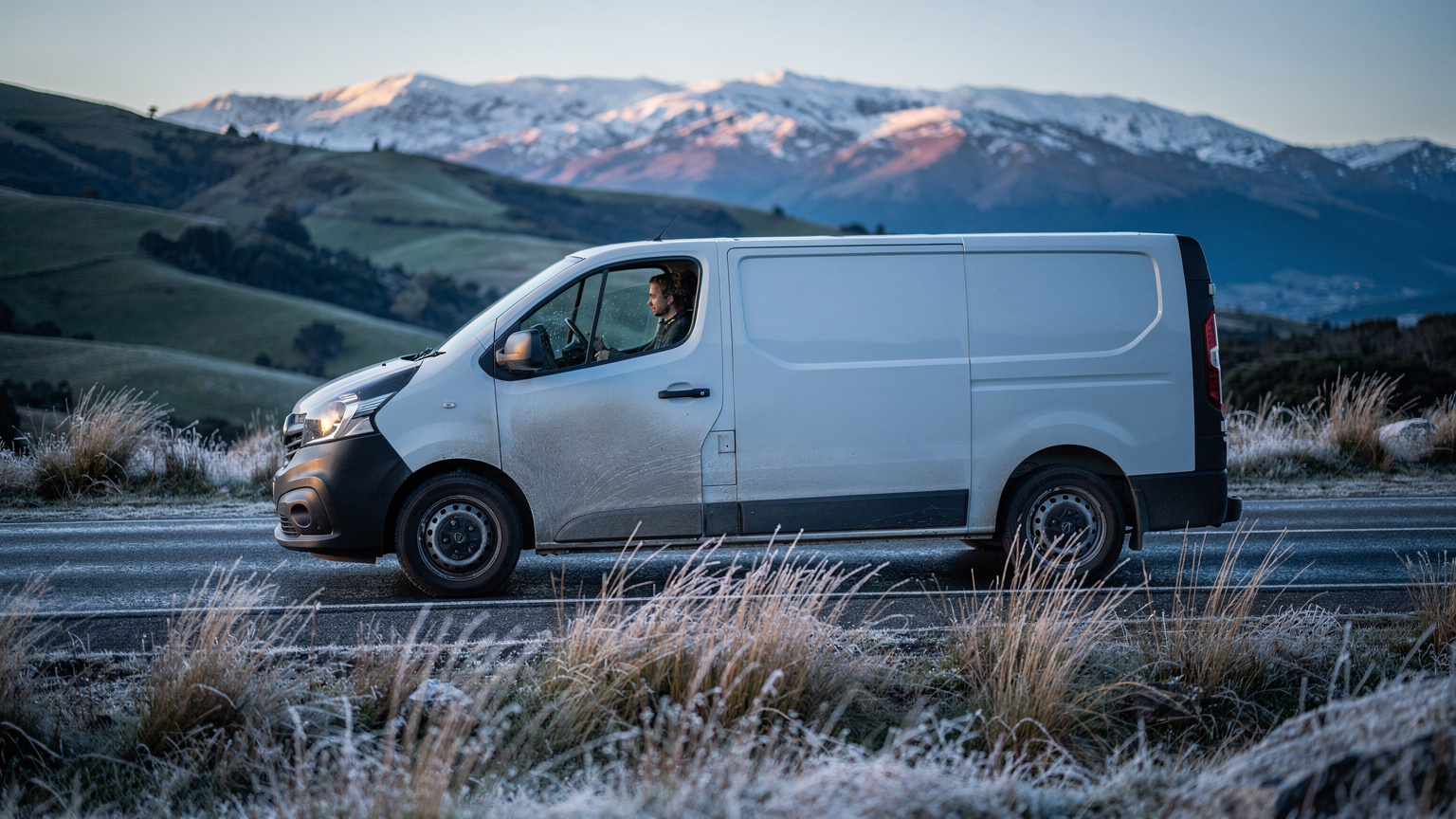
In the south, winter affects when you schedule each part of a run. In an August 2026 traffic bulletin about highways closed by snow, NZ Transport Agency Waka Kotahi advised: "Those travelling late at night or early in the mornings are most likely to encounter icy conditions."
Early delivery runs and late same-day jobs are on the road at exactly those hours. A few planning changes help them run to time.
Check road status before the first van leaves. On frosty mornings, widen the windows for exposed rural and high-country legs.
Where the route allows, schedule those exposed legs later in the run and serve town stops first. The optimiser can re-sequence the remaining stops around the new order.
Give drivers room to make the call on conditions. If a run slows down, live tracking updates customers automatically, which is much better for them than a missed window with no warning.
How proof of delivery and live tracking give every job a clear record
Every completed same-day job should leave a record that anyone on your team can open later.
Locate2u's proof of delivery captures photo evidence, signatures and timestamps for every delivery, along with location data. The driver photographs the drop on site, and the business and the customer can both refer to the record.
This helps everyone. A customer on a lifestyle block can see exactly where the parcel was left at the top of the driveway, and your office can answer a query by opening the job record without ringing the driver mid-run.
Live tracking gives the same visibility before the van arrives. With real-time tracking, dispatch sees every vehicle on a live dashboard, and customers follow their own delivery through a tracking link.
If a vehicle is running behind, the team sees it straight away. They can then move a later job to another van or send the customer a revised arrival time.
Together, tracking and proof of delivery record each job from start to finish: the window promised, where the van was, and how the goods were handed over.
A useful habit is to review a handful of completed jobs with the team each week, photos included. It's a quick way to see which handovers go smoothly and which addresses need a better note next time.
Measuring your own on-time performance with delivery data
National data won't tell you how reliable your routes are. The Ministry of Transport's July 2025 network performance report states: "We do not currently have any appropriate and frequent measures of road reliability."
That leaves your own delivery data as the best guide to how a Tuesday afternoon run across town will go. On-demand software collects that data automatically with every completed job.
Start with on-time rate by zone and hour band. It shows where your windows have room to spare and where they're tight.
Next, compare planned and actual arrival for each stop. If one stretch of road is consistently late, widen that window or move the stop earlier in the run.
Time on site matters too. Drops of bulky goods or deliveries to apartment buildings take longer, and allowing for that in the plan keeps the rest of the route on time.
Then track first-attempt completion. As it rises, fewer jobs come back to the depot for a second trip.
Share the results with your drivers as wins. They know the roads best, and their notes on access and timing help turn a good window into a reliable one.
A buyer's checklist for on-demand delivery software in New Zealand
Bring a real day's orders to every demo, and use this checklist to test what matters for a New Zealand operation.
| What to check | How to test it on your own work |
|---|---|
| Live insertion of same-day jobs | Add a mid-morning order to a recent day's routes and check the arrival time at every other stop. |
| Planned runs and same-day jobs together | Load tomorrow's scheduled runs, then add same-day orders to the same dispatch board. |
| Delivery windows and vehicle capacity | Enter your real windows and van loads, then confirm no optimised route breaks them. |
| Customer tracking and notifications | Place a test order to your own phone and follow it all the way to the door. |
| Proof of delivery | Complete a test drop with a photo and signature, then find that record from the office. |
| Working without mobile signal | Run the driver app on a rural route with patchy coverage and confirm jobs sync once back in range. |
| Order connections | Check that orders from your online store or other systems arrive in dispatch without re-keying. |
| On-time reporting | Ask to see planned against actual arrival by zone and time band, using your test data. |
Run each test on routes you actually drive, such as an Auckland zone, a rural run or an early southern route in winter. If a result raises questions, ask to see it again with your own data. That's the quickest way to know whether the software fits your work.
Frequently asked questions
What is the difference between on-demand and scheduled delivery software?
Scheduled delivery software plans fixed runs the day before, while on-demand software keeps planning after drivers leave the depot and adds new orders to live routes as they arrive. If you run both kinds of delivery, check that a single dispatch board handles planned runs and same-day jobs together.
Will a driver app keep working where mobile coverage drops out on rural roads?
Ask any vendor to show how the app stores photos, signatures and job status without signal and syncs them once coverage returns. Test it on your own rural routes and inter-island runs before you commit, rather than relying on a demo in town.
Is same-day delivery worth offering for a small New Zealand business?
McKinsey estimates that in most countries, same-day accounts for less than 5 percent of the courier, express and parcel market. That makes it a natural premium option for a small business: start with one zone and a clear order cut-off, then widen it once your on-time record holds.
Can on-demand delivery software take orders straight from an online store?
Yes, Locate2u offers integrations and an API so new orders can flow into dispatch without re-keying. List the systems you need connected, then book a call with the Locate2u team to see it running on your own order flow.
A reliable same-day service starts small: one zone, a clear cut-off and windows your routes can keep, with your own delivery data showing when to widen them. To see how new orders join routes already on the road, explore Locate2u's dispatch planning.